
Building a Digital-First Multi-Specialty Hospital
A full-stack implementation of HIS, ERP (Dynamics 365), CRM, and Security Infrastructure in Jammu, India.
Executive Summary
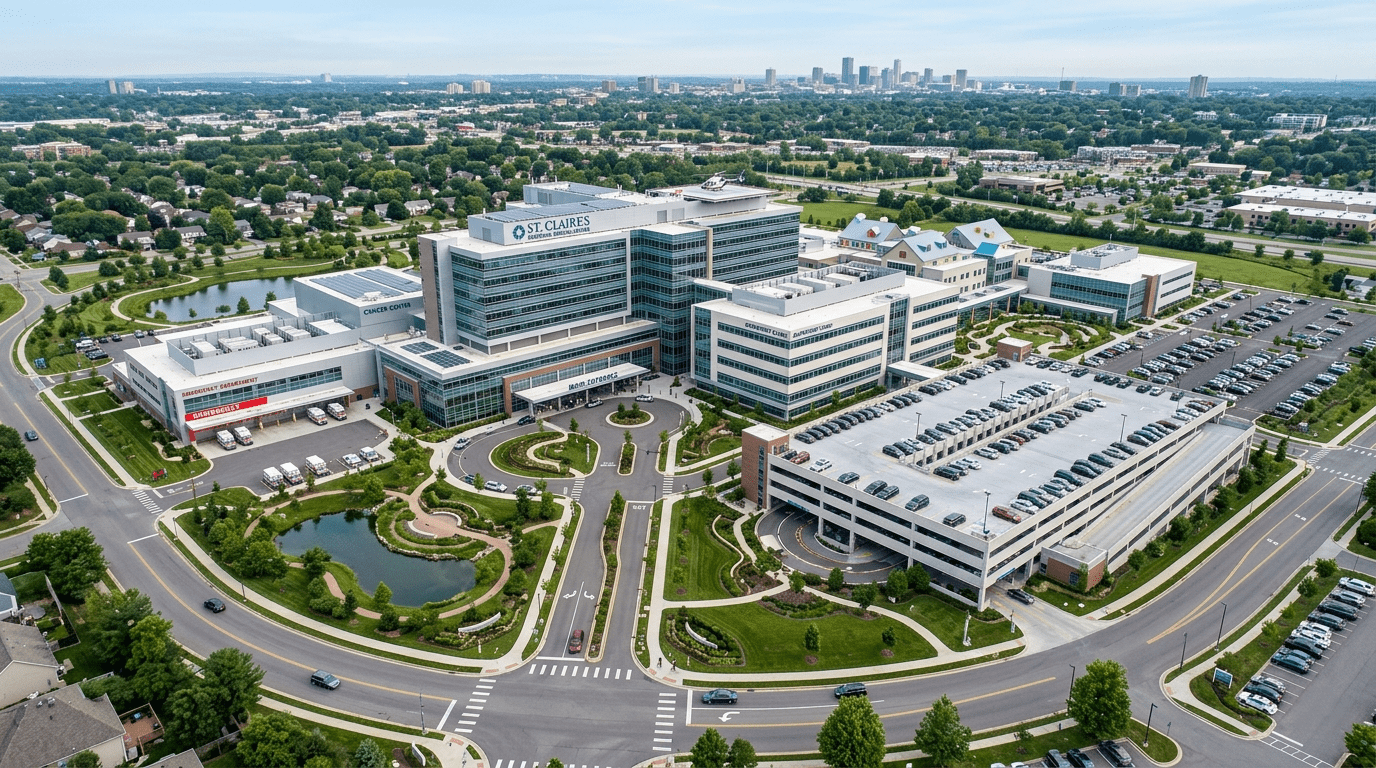
As part of its vision to establish a modern, digitally enabled healthcare facility, a newly developed multi-specialty hospital in Jammu, India, set out to build a fully integrated digital platform to support clinical, administrative, and operational workflows.
Unlike many hospitals that gradually adopt technology over time, the leadership team aimed to establish a digital-first operational model from day one. Livexpert Technologies was selected to design and implement a comprehensive ecosystem, resulting in a scalable platform that streamlines patient care and provides real-time visibility into hospital performance.
The Challenge: Building from the Ground Up
Launching a new hospital requires establishing not only clinical services but also the operational systems that support patient care and hospital management. The hospital leadership identified several critical challenges during the planning phase.
Building a Digital Foundation from Day One
The hospital required a centralized digital platform capable of managing the complete patient lifecycle, including:
- Patient registration and appointment scheduling
- Outpatient and inpatient care workflows
- Pharmacy and diagnostics operations
- Billing and financial management
- Administrative reporting and performance monitoring
Without an integrated system, these processes would rely heavily on manual coordination and disconnected tools.
Integrating Clinical Operations with Financial Systems
Healthcare operations generate a high volume of transactions across departments such as diagnostics, pharmacy, and inpatient services. The hospital required a system that would automatically connect clinical workflows with financial processes, ensuring that:
- Patient services are accurately billed
- Inventory consumption is tracked in real time
- Financial reporting remains transparent and reliable
- Hospital management systems
- Department-wide network connectivity
- CCTV surveillance for security monitoring
- Data security and backup systems
- Patient registration with unique hospital identification (UHID)
- Appointment scheduling and queue management
- OPD and IPD management workflows
- Nursing and patient care coordination
- Pharmacy dispensing and inventory tracking
- Diagnostics management for pathology and radiology
- Discharge summaries and patient documentation
- Financial accounting and reporting
- Procurement and vendor management
- Inventory control and stock valuation
- Human resource management and payroll processing
- Patient inquiries and service requests
- Appointment coordination and reminders
- Communication workflows for follow-up care
- Enterprise-grade network connectivity across hospital departments
- Secure server and database environment
- CCTV surveillance systems for facility security
- Backup and access control mechanisms to protect hospital data
Establishing Reliable Infrastructure for Healthcare Operations
In addition to software systems, the hospital required a secure and scalable technology infrastructure capable of supporting:
Ensuring reliable infrastructure was essential to maintain operational continuity and patient safety.
The Solution
Livexpert Technologies designed a layered digital architecture that integrates hospital operations, enterprise systems, and IT infrastructure into a unified platform.
Hospital Information System (HIS)
A custom-built HIS platform was implemented to manage clinical and operational workflows across the hospital. The system enables:
By digitizing these workflows, the hospital can manage patient services efficiently while maintaining accurate clinical records.
ERP for Financial and Operational Management
To manage financial and administrative processes, the hospital implemented Microsoft Dynamics 365 Business Central. The ERP platform provides enterprise-level capabilities for:
Integration between the HIS and ERP systems ensures that operational activities automatically generate corresponding financial records.
CRM for Patient Engagement
To enhance patient communication and engagement, a CRM layer was introduced to support:
CRM for Patient Engagement
We introduced a dedicated CRM layer to manage patient inquiries, appointment reminders, and follow-up care, ensuring a consistent patient journey from the first contact.
This enables the hospital to maintain consistent communication with patients throughout their healthcare journey.
Integrated IT Infrastructure
Livexpert also implemented the hospital’s complete IT infrastructure to support the digital ecosystem. Key infrastructure components included:
This infrastructure ensures stable performance and system reliability across the hospital environment.
Implementation Approach
"The project was executed through a structured implementation approach to ensure minimal operational disruption."
Phase 1 - Infrastructure and ERP Foundation
The first phase focused on establishing the hospital’s operational backbone by deploying the ERP platform and core infrastructure systems. This included:
- Network and infrastructure setup
- Financial management system implementation
- Procurement and inventory management configuration
Phase 2 - HIS Deployment and Integration
The second phase focused on implementing the HIS platform and integrating it with the ERP system. Clinical workflows, pharmacy operations, diagnostics systems, and billing processes were configured and tested to ensure seamless coordination between departments.
Results and Operational Impact
The implementation established a fully integrated hospital technology platform capable of supporting the hospital’s operations from the first day of service.
Faster Patient Registration and Service Flow
The digital registration system enables hospital staff to register new patients and generate UHIDs within seconds, reducing administrative delays.
Improved Department Coordination
Clinical workflows across OPD, IPD, diagnostics, and pharmacy are now digitally connected, enabling better coordination between departments.
Real-Time Financial Visibility
Integration with the ERP platform ensures that hospital transactions automatically generate financial records, enabling accurate financial reporting and monitoring.
Centralized Data and Reporting
Management dashboards built using Microsoft Power BI, provide leadership teams with insights into operational performance, patient volumes, and departmental efficiency.
Scalable Digital Infrastructure
The hospital’s technology architecture was designed to support future expansion, allowing the hospital to scale its digital systems as operations grow.
Technology Stack
The digital hospital platform integrates multiple technologies including:
- Custom Hospital Information System (.NET)
- Microsoft Dynamics 365 Business Central
- Microsoft Power BI
- Patient CRM platform
- Hybrid infrastructure environment
- CCTV surveillance systems
Conclusion
The successful implementation of a fully integrated HIS, ERP, CRM, and IT infrastructure platform has enabled the hospital to launch operations with a modern, technology-driven foundation. By connecting clinical workflows, enterprise systems, and infrastructure under a unified architecture, the hospital is well positioned to deliver efficient healthcare services while maintaining operational transparency and scalability.