Microsoft Bridge to Cloud 3 (BTC3): Complete 2026 Enterprise Guide
Microsoft Bridge to Cloud 3 Is Redefining Enterprise Cloud Licensing in 2026
Microsoft Bridge to Cloud 3 is the newest evolution of Microsoft’s cloud transition incentives designed specifically for enterprises moving from on-premises infrastructure to Azure and modern cloud services.
With growing pressure to modernize IT, reduce infrastructure costs, and adopt AI-ready platforms, Microsoft introduced BTC3 as a structured financial and strategic pathway for Enterprise Agreement (EA) customers.
If you are evaluating long-term cloud strategy in 2026, understanding the BTC3 program explained clearly is essential.
This guide breaks down:
What Microsoft Bridge to Cloud 3 actually is
How the Microsoft BTC3 enterprise agreement works
Eligibility criteria
Pricing structure
Timeline considerations
Migration strategy
ROI implications
What Is Microsoft Bridge to Cloud 3?
BTC3 Program Explained in Simple Terms
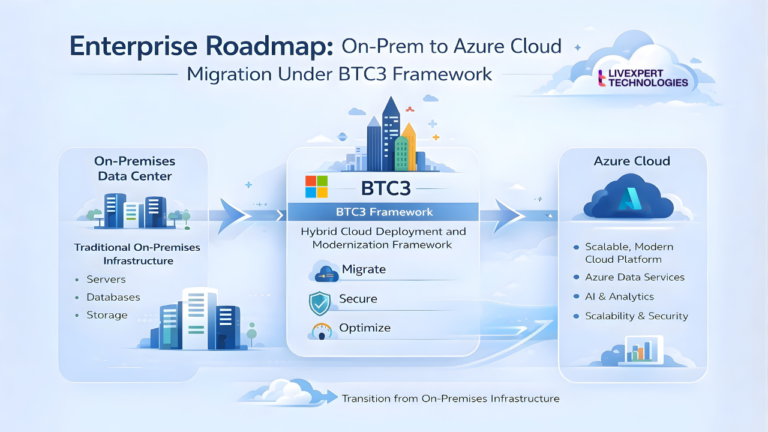
Microsoft Bridge to Cloud 3 (BTC3) is a transitional incentive program offered to Enterprise Agreement customers to encourage migration from traditional Microsoft licensing models to Azure-based cloud infrastructure.
It provides structured financial benefits when enterprises commit to Azure consumption under a defined agreement term.
In simpler terms:
BTC3 allows enterprises to shift from legacy licensing models to Azure while receiving transitional discounts and incentives.
It is not just a pricing model, it is a cloud acceleration framework.
Why Microsoft Introduced Bridge to Cloud 3
Microsoft recognizes that many enterprises still operate hybrid or fully on-prem environments.
Common enterprise challenges include:
Legacy infrastructure costs
Hardware refresh cycles
Data center maintenance
Rising cybersecurity risks
AI adoption requirements
Scalability limitations
Microsoft Bridge to Cloud 3 helps solve these problems by:
Offering structured Azure commitments
Providing cost predictability
Supporting phased migration
Encouraging hybrid-to-cloud transitions
This aligns with Microsoft’s long-term Azure-first strategy.
Who Should Pay Attention to BTC3 in 2026?
Microsoft Bridge to Cloud 3 is primarily designed for:
Large enterprises with Enterprise Agreements
Organizations renewing their EA in 2026
Businesses moving from on-prem SQL/Windows Server
Enterprises planning Azure AI adoption
Companies evaluating hybrid cloud optimization
If your enterprise currently runs Microsoft workloads on-prem and your EA renewal is approaching, BTC3 becomes strategically important.
How Microsoft BTC3 Enterprise Agreement Works
Under a Microsoft BTC3 enterprise agreement, organizations commit to a structured Azure consumption model.
Key components include:
Azure Monetary Commitment (AMC)
Defined agreement term (typically 3 years)
Incentive-based discount structure
Cloud consumption targets
Licensing alignment with Azure services
The financial model rewards enterprises that actively migrate workloads to Azure instead of staying static.
Bridge to Cloud 3 vs Previous Bridge to Cloud Programs
Microsoft Bridge to Cloud 3 builds on earlier programs but introduces refined incentive alignment.
Key improvements in BTC3 include:
Stronger Azure consumption focus
Improved hybrid transition structure
Better integration with Azure AI services
Alignment with Microsoft 365 and security stack
Optimized commitment flexibility
This makes BTC3 more structured and enterprise-focused than prior versions.
Enterprises evaluating Azure migration strategy can explore cloud transformation with expertise at Livexpert Technologies.

Bridge to Cloud 3 Eligibility: Who Qualifies in 2026?
Understanding Bridge to Cloud 3 eligibility is the first step before evaluating financial benefits.
Microsoft Bridge to Cloud 3 is not available to all customers. It is primarily designed for Enterprise Agreement customers meeting specific conditions.
Core Eligibility Requirements
Most enterprises must:
Have an active Microsoft Enterprise Agreement (EA)
Be approaching EA renewal in 2026
Maintain qualifying on-prem workloads (e.g., Windows Server, SQL Server)
Commit to defined Azure consumption targets
Meet minimum Azure Monetary Commitment (AMC) thresholds
Eligibility may also depend on:
Existing Azure footprint
Hybrid licensing posture
Contract history
Regional policy alignment
Enterprises already running hybrid models are often strong BTC3 candidates.
Microsoft BTC3 Enterprise Agreement Structure Explained
Under a Microsoft BTC3 enterprise agreement, enterprises commit to structured Azure spending over a defined term, typically three years.
The structure usually includes:
A fixed Azure Monetary Commitment (AMC)
Transition incentive discounts
Structured Azure workload migration roadmap
License alignment for hybrid workloads
Unlike simple CSP models, BTC3 aligns with long-term strategic planning.
How Microsoft Bridge to Cloud 3 Pricing Works
Now let’s break down the pricing mechanics clearly.
Azure Monetary Commitment (AMC)
At the heart of Microsoft Bridge to Cloud 3 is a pre-agreed Azure consumption commitment.
This means:
The enterprise commits to spend a fixed amount on Azure over the agreement term.
Discounts or incentives are structured based on that commitment.
Incentive Model
The BTC3 program provides:
Transitional financial incentives
Azure consumption credits
Potential discount tiers based on commitment level
Structured migration incentives
The larger and more strategic the Azure commitment, the stronger the financial structure tends to be.
How BTC3 Compares Financially to Staying On-Prem
Enterprises evaluating BTC3 often ask:
Is Microsoft Bridge to Cloud 3 actually more cost-effective than maintaining on-prem infrastructure?
Key cost differences include:
On-Prem Costs
Hardware refresh cycles
Data center energy and maintenance
Security infrastructure
Licensing renewals
Disaster recovery setup
Scaling limitations
BTC3 + Azure Model
Predictable Azure spend
Scalable infrastructure
Built-in security layers
Reduced physical infrastructure
Faster innovation cycles
AI-readiness
The ROI impact depends on workload modernization strategy, not just pricing.
Timeline Planning: When Should Enterprises Start?
Timing is critical.
Enterprises should start evaluating Microsoft Bridge to Cloud 3 at least 9-12 months before EA renewal.
Recommended timeline:
12 Months Before Renewal
Assess current licensing position
Audit on-prem workloads
Analyze Azure consumption patterns
9 Months Before Renewal
Model potential Azure commitments
Evaluate Bridge to Cloud 3 eligibility
Begin negotiation planning
6 Months Before Renewal
Lock migration roadmap
Finalize commitment structure
Align financial projections
Waiting until the final quarter weakens negotiation leverage.
Common Enterprise Mistakes When Evaluating BTC3
Many enterprises miscalculate the opportunity.
Common mistakes include:
Treating BTC3 as just a discount program
Underestimating migration complexity
Overcommitting Azure spend without roadmap
Ignoring AI and modernization alignment
Failing to optimize licensing mix
Delaying eligibility review until renewal deadline
Microsoft Bridge to Cloud 3 should be treated as a transformation strategy, not just a procurement event.
For official Microsoft licensing and Azure guidance, visit:
https://www.microsoft.com/licensing
Microsoft Bridge to Cloud 3 as a Cloud Acceleration Framework
While many organizations view Microsoft Bridge to Cloud 3 as a licensing incentive, its true power lies in enabling structured enterprise cloud transformation.
BTC3 works best when aligned with a defined migration strategy. Without a roadmap, Azure commitments can turn into cost pressure instead of strategic value.
The right approach ensures Azure adoption matches business growth, modernization, and AI readiness goals.
Enterprise Migration Strategy Under BTC3
Step 1: Workload Assessment & Prioritization
Before committing under a Microsoft BTC3 enterprise agreement, enterprises must assess their current environment.
Start by categorizing workloads into:
Lift-and-shift candidates
Refactor-ready applications
Cloud-native modernization opportunities
Legacy workloads requiring replacement
High-priority candidates typically include:
SQL Server databases
Windows Server workloads
Dev/Test environments
Backup and disaster recovery systems
AI and analytics platforms
Prioritization prevents overcommitment risk.
Step 2: Hybrid-to-Cloud Transition Planning
Most enterprises will not migrate everything immediately. That’s why Microsoft Bridge to Cloud 3 supports hybrid strategies.
A typical BTC3 migration roadmap includes:
Phase 1: Hybrid Optimization
Enable Azure Arc
Activate hybrid benefits
Optimize licensing mix
Phase 2: Infrastructure Migration
Move virtual machines to Azure
Transition SQL workloads
Implement Azure Backup and DR
Phase 3: Modernization
Adopt PaaS services
Implement Azure Kubernetes Service
Integrate AI workloads
Improve security posture
A phased model ensures smoother cost alignment with Azure commitments.
AI Readiness and Microsoft Bridge to Cloud 3
One of the strongest strategic advantages of Microsoft Bridge to Cloud 3 is AI alignment.
In 2026, enterprises are prioritizing:
Azure AI services
Copilot integrations
Advanced analytics
Data lake modernization
AI-powered automation
BTC3 enables enterprises to build a financial structure that supports AI adoption without requiring new licensing frameworks.
Instead of separate AI budgeting, Azure consumption supports AI growth naturally.
How to Build a Strong ROI Case for BTC3
CFOs and procurement leaders will require measurable ROI justification.
Here’s how enterprises build a strong business case for Microsoft Bridge to Cloud 3:
1. Infrastructure Cost Reduction
Compare:
On-Prem:
Hardware refresh
Energy
Maintenance
Security systems
DR infrastructure
Azure via BTC3:
Elastic scalability
Reduced CapEx
Built-in compliance
Centralized management
2. Operational Efficiency Gains
Cloud adoption reduces:
Manual patching cycles
Infrastructure downtime
Long deployment timelines
Dev/Test environment provisioning delays
3. AI & Innovation Acceleration
Microsoft Bridge to Cloud 3 supports:
Faster AI experimentation
Analytics modernization
Automation at scale
Enterprise Copilot readiness
This has direct impact on revenue growth and operational efficiency.
4. Risk Reduction & Security Benefits
Azure provides:
Advanced threat detection
Centralized identity management
Zero-trust architecture
Compliance certifications
Security improvements significantly reduce risk exposure costs.
Financial Modeling Under BTC3
When modeling Azure commitment under a Microsoft BTC3 enterprise agreement, enterprises should:
Map current license spend to Azure equivalents
Model 3-year consumption growth
Include AI and analytics growth projections
Factor modernization savings
Align commitment tiers to realistic migration timelines
Overcommitment is risky. Undercommitment reduces incentive value.
Balance is critical.
For structured Azure migration strategy and enterprise cloud advisory:
Conclusion: Why Microsoft Bridge to Cloud 3 Is a Strategic Move for 2026
Microsoft Bridge to Cloud 3 is not just another licensing incentive. It is a structured enterprise transition framework designed for organizations ready to modernize, scale, and prepare for AI-driven operations.
For enterprises approaching their 2026 Enterprise Agreement renewal, BTC3 represents a pivotal decision point.
Done correctly, a Microsoft BTC3 enterprise agreement can:
Reduce long-term infrastructure cost exposure
Improve licensing predictability
Accelerate Azure adoption
Enable AI readiness
Strengthen cybersecurity posture
Support hybrid-to-cloud modernization
However, success depends on:
Clear eligibility evaluation
Accurate Azure commitment modeling
A phased migration roadmap
ROI-aligned financial structuring
Strategic negotiation before renewal deadlines
Enterprises that treat BTC3 as a strategic transformation opportunity, rather than just a discount mechanism, will gain measurable competitive advantage.
Frequently Asked Questions About Microsoft Bridge to Cloud 3
Microsoft Bridge to Cloud 3 is a structured incentive program designed for Enterprise Agreement customers transitioning from on-prem Microsoft licensing to Azure-based cloud consumption.
Under a Microsoft BTC3 enterprise agreement, organizations commit to a defined Azure Monetary Commitment over a multi-year term in exchange for transitional incentives and structured cloud migration benefits.
Enterprises with active or renewing Enterprise Agreements, qualifying on-prem workloads, and the ability to commit to Azure consumption targets are typically eligible.
Microsoft Bridge to Cloud 3 can be more cost-effective when factoring infrastructure refresh cycles, security investments, AI initiatives, and operational efficiency gains. However, ROI depends on migration strategy and commitment accuracy.
Ideally 9 to 12 months before Enterprise Agreement renewal. Early evaluation improves negotiation leverage and migration planning accuracy.
Yes. Microsoft Bridge to Cloud 3 is designed to support hybrid transitions, enabling phased migration from on-prem infrastructure to Azure.
BTC3 aligns Azure commitment with AI services, analytics platforms, and modernization tools, allowing enterprises to adopt AI capabilities without restructuring licensing models separately.